
Introduction
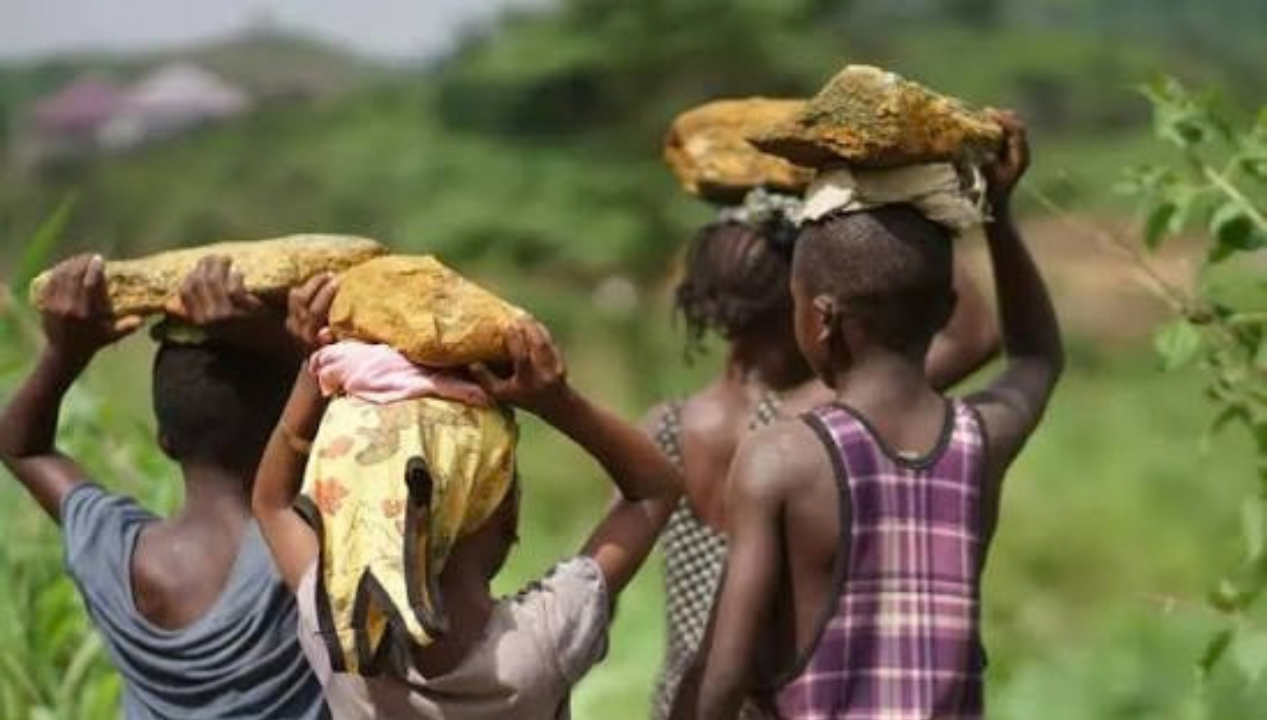
Child labour remains one of the most pressing child protection challenges in Nigeria. It refers to work that deprives children of their childhood, education, dignity, and opportunities for healthy physical and mental development. Many Nigerian children engage in activities such as street hawking, domestic service, farming, mining, and other forms of labour that expose them to exploitation and hazardous conditions. Factors such as poverty, unemployment, limited access to education, and socio-cultural practices continue to fuel the problem. Recognizing the dangers of child labour, the Nigerian government has implemented various interventions aimed at protecting children and promoting their welfare.
The Situation of Child Labour in Nigeria
Despite ongoing efforts, child labour remains widespread across the country. According to the 2022 Nigeria Child Labour Survey conducted by the National Bureau of Statistics (NBS), the Federal Ministry of Labour and Employment, and the International Labour Organization (ILO), approximately 24.7 million children aged 5–17 years were involved in child labour, representing 39.2% of all children within that age group. In addition, about 14.4 million children (22.9%) were engaged in hazardous work that could harm their health, safety, or development. The survey also revealed that 31.8 million children, representing 50.5% of Nigerian children aged 5–17 years, participated in economic activities. Rural areas recorded a significantly higher prevalence of child labour (44.8%) compared to urban areas (30.0%).
These statistics demonstrate the urgent need for effective interventions to reduce child labour and ensure that every Nigerian child enjoys a safe and productive childhood.
Why Child Labour is a Problem
Child labour continues to be a serious issue in Nigeria due to its far-reaching effects on children, families, and national development. One of its most damaging consequences is its impact on education. When children are forced to work, they often miss school, perform poorly academically, or drop out entirely. This denies them the opportunity to acquire the knowledge and skills needed to improve their lives in the future, thereby increasing the likelihood of continued poverty.
The problem is closely linked to poverty, as many families rely on the income generated by their children for survival. However, this creates a harmful cycle: children who miss out on education grow up with limited skills and job opportunities, making it difficult for them to escape poverty as adults.
Beyond its impact on individuals, child labour also affects Nigeria’s national development. A country’s progress depends on an educated and skilled workforce, but child labour reduces the number of children who can grow into productive, well-trained adults. This slows economic growth and increases social inequality.
Child labour is a serious problem in Nigeria because it violates children’s rights, undermines education, exposes children to harm, and perpetuates poverty. Addressing it requires strong laws, effective enforcement, access to quality education, and support for vulnerable families so that every child can enjoy a safe, healthy, and productive childhood.
Interventions:
Legal and Policy Interventions
One of Nigeria’s major interventions against child labour is the enactment of the Child Rights Act (2003), which protects children from economic exploitation and hazardous work. The Act guarantees children’s rights to survival, development, education, and protection from abuse. Nigeria has also ratified key conventions of the International Labour Organization, including Convention No. 138 on the Minimum Age for Employment and Convention No. 182 on the Worst Forms of Child Labour. These international commitments have strengthened the country’s legal framework for protecting children from exploitative labour practices.
Educational Interventions
Education is widely recognized as one of the most effective tools for combating child labour. Through the Universal Basic Education (UBE) Programme, the Nigerian government provides free and compulsory basic education for children. The objective is to reduce school dropout rates and prevent children from entering the workforce at an early age.
Evidence from the Nigeria Child Labour Survey shows that school attendance is negatively affected by child labour. While 81.4% of children who are not involved in child labour attend school, only 75.1% of children engaged in child labour attend school. This highlights the importance of expanding educational opportunities and removing barriers that keep children out of school.
Interventions in Preventing Class-Based Inequality Among Children
Class differences among children are often overlooked, yet they significantly influence children’s experiences, opportunities, and self-esteem. Children become aware of social and economic differences from a young age. They observe disparities in housing, clothing, access to technology, transportation, and educational opportunities. In Nigeria, these differences are further reinforced by the hierarchy that exists among schools, where some institutions have access to better resources, facilities, and international curricula while others struggle with basic learning materials.
To reduce class-based inequality among children, Nigeria must prioritize equitable access to quality education regardless of a child’s background. Government investment in public schools, improved learning facilities, teacher training, and access to technology can help narrow the gap between children from different socioeconomic groups.
Schools should also promote inclusive environments that discourage discrimination based on family income, religion, ethnicity, or social status. Activities that encourage interaction and collaboration among children from diverse backgrounds can help reduce stereotypes and foster mutual respect.
Furthermore, social protection programs, scholarships, school feeding initiatives, and support for vulnerable families can ensure that children are not denied opportunities because of economic circumstances. By creating systems that provide equal opportunities for all children, Nigeria can help reduce the effects of class inequality and build a more inclusive society.
Poverty Reduction and Social Protection Programmes
Poverty remains the primary driver of child labour in Nigeria. Many families depend on the income generated by their children to meet basic household needs. To address this challenge, the government has introduced social protection programmes such as conditional cash transfers, school feeding programmes, youth empowerment initiatives, and livelihood support schemes for vulnerable households.
These interventions seek to improve household incomes and reduce the economic pressures that force children into labour. By strengthening family livelihoods, the government can reduce reliance on child labour as a survival strategy.
Partnerships/NGOs with International Organizations
Beyond government action, civil society and international organizations play a major role
Nigeria has collaborated with organizations such as the United Nations Children’s Fund and the International Labour Organization to address child labour. These partnerships support data collection, policy development, awareness campaigns, capacity building, and community-based interventions aimed at protecting vulnerable children.
The 2022 Child Labour Survey itself was conducted through collaboration among the NBS, the ILO, and the Federal Ministry of Labour and Employment, demonstrating the importance of partnerships in generating evidence for policy action.
NGOs also help in reintegrating children back into school and providing psychosocial support for those withdrawn from exploitative labour.
Community Awareness and Advocacy
The government and civil society organizations have also implemented awareness campaigns to educate communities about the dangers of child labour and the importance of education. Religious leaders, traditional rulers, community-based organizations, and the media play important roles in sensitizing families about children’s rights and encouraging the reporting of child exploitation cases.
Such advocacy efforts help to change social attitudes that normalize child labour and promote greater community responsibility for child protection.
Challenges and the Way Forward
Despite these interventions, significant challenges remain. Poverty continues to drive child labour, while weak enforcement of existing laws limits their effectiveness. Other challenges include limited public awareness, insecurity in certain regions, and inadequate funding for child protection and education programmes. These issues make it difficult to fully eliminate child labour in Nigeria.
Although Nigeria has made significant progress in addressing child labour, several challenges remain. Weak enforcement of labour laws, widespread poverty, insecurity, population growth, and inadequate educational facilities continue to contribute to the persistence of child labour. The North-West region recorded the highest number of children involved in child labour and hazardous work, highlighting regional disparities that require targeted interventions.
To effectively eliminate child labour, Nigeria must strengthen the enforcement of child protection laws, expand access to quality education, increase investment in social protection programmes, and create economic opportunities for vulnerable families. Greater collaboration among government agencies, development partners, communities, and the private sector will also be essential in addressing the root causes of child labour.
Conclusion
Nigeria has demonstrated its commitment to combating child labour through legislation, educational initiatives, poverty reduction programmes, and partnerships with international organizations. However, the 2022 Child Labour Survey shows that millions of Nigerian children are still engaged in child labour and hazardous work.
It has built a strong foundation through laws, institutions, education programs, and partnerships with global organizations. However, the true test is not the existence of frameworks but their consistent enforcement and community acceptance.
Ending child labour in Nigeria will require more than policy it requires sustained political will, stronger institutional coordination, economic support for families, and a national mindset shift that every child deserves not just to work, but to learn, grow, and thrive.
Because ultimately, protecting children is not just a legal obligation it is the measure of a nation’s future.